

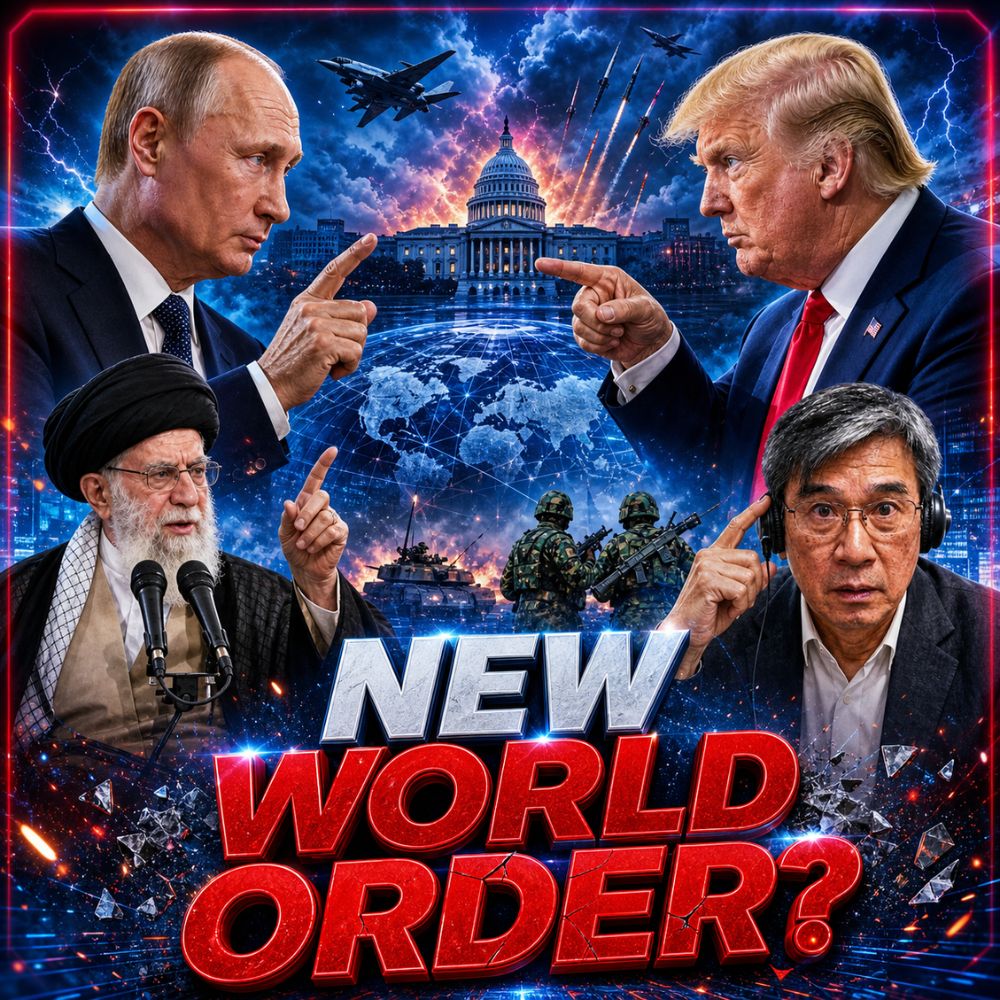
The Great Pivot North: How Iran’s Flight to Putin Signals the Collapse of American Diplomatic Leverage
In the high-stakes world of global geopolitics, the most powerful messages are often delivered without a single word being spoken. In the last 24 hours, the world witnessed such a message: a plane carrying Iranian Foreign Minister Abbas Araghchi did not fly west toward Washington or a neutral European capital. Instead, it flew north, landing in St. Petersburg for a direct, high-profile meeting with Vladimir Putin. This deliberate “snub” to the United States represents more than just a diplomatic breakdown; it is a visible, operational signal that the architecture of American coercive diplomacy, built over four decades, may be collapsing in real time.
For months, back-channel negotiations between the U.S. and Iran had been advancing with cautious optimism. The framework—a rough echo of the 2015 JCPOA—promised sanctions relief in exchange for nuclear limitations. However, that progress has vanished. Araghchi’s departure was punctuated by a casual yet devastating statement: the “excessive demands” of the United States made further talks impossible. While President Trump maintained a posture of “waiting by the phone,” stating that Iranian leaders “could call us if they want to talk,” Iran has effectively left the building. This asymmetry in movement highlights a profound shift in psychological leverage.
The strategic reality is that Russia is no longer a bystander in the Middle East. Having survived years of intense Western sanctions and the logistical pressures of the Ukraine war, Moscow has cultivated a “network of the sanctioned”—a convergence of interests among actors like Iran, North Korea, and China who benefit from American strategic overextension. According to Professor Jiang Insight, the St. Petersburg meeting is not a gesture of frustration; it is a formal negotiating session for a parallel economic and military architecture.
At the heart of this new alignment is the North-South Trade Corridor, a massive infrastructure project connecting Russia to the Indian Ocean through Iran. By bypassing Western-controlled maritime choke points, this corridor serves as a continental-scale sanctions evasion mechanism. Furthermore, defense analysts are sounding the alarm over a potential “reverse” military relationship. While Iran has famously supplied drone technology to Russia, the question now is what advanced Russian technology—missile guidance, electronic warfare, or satellite intelligence—might flow back to Tehran in exchange for this deepened alliance.
The most immediate threat, however, concerns the Strait of Hormuz. With 20% of the world’s oil supply passing through this narrow waterway, the stability of the global economy is structurally tied to its openness. Russia, as a major oil exporter, has a direct financial incentive to see Hormuz under threat; every dollar increase in oil prices pads the Kremlin’s war chest. If Iran, backed by Russian strategic cover, decides to restrict passage, Washington would face a cascading crisis: skyrocketing energy prices for its allies in Asia and Europe, and a military confrontation that would drain its already strained precision-guided missile inventories.
This brings us to an uncomfortable truth often ignored in mainstream analysis: American coercive capability is not infinite. The U.S. defense industrial base is currently under documented strain, with munitions stockpiles being depleted by simultaneous support for Ukraine and regional deterrence postures. Adversaries like Iran and Russia track these inventory levels with clinical precision. They understand that a conflict in the Middle East would force the U.S. to choose between theaters, potentially degrading its ability to defend interests in the Pacific or Europe.
Washington now faces a series of difficult options, none of which offer a clean resolution. Escalating pressure through more sanctions has a diminishing return as Iran builds alternative trade routes. A military strike carries the risk of a regional conflagration and a global economic meltdown. Conversely, offering diplomatic concessions after the “Moscow pivot” would be seen as rewarding defection, potentially alarming NATO and Gulf allies.
The flight to Moscow is a functional exit from the American-led world order. It suggests that the “threat of military action” held in reserve as the ultimate persuader has lost its decisive edge. As Gulf states like Saudi Arabia and the UAE watch this realignment, their subsequent moves—whether to hedge toward Moscow or double down on Washington—will be the true indicators of where the global center of gravity now lies. The plane has landed, the vector is set, and the geopolitical map is shifting faster than the world can keep up.