

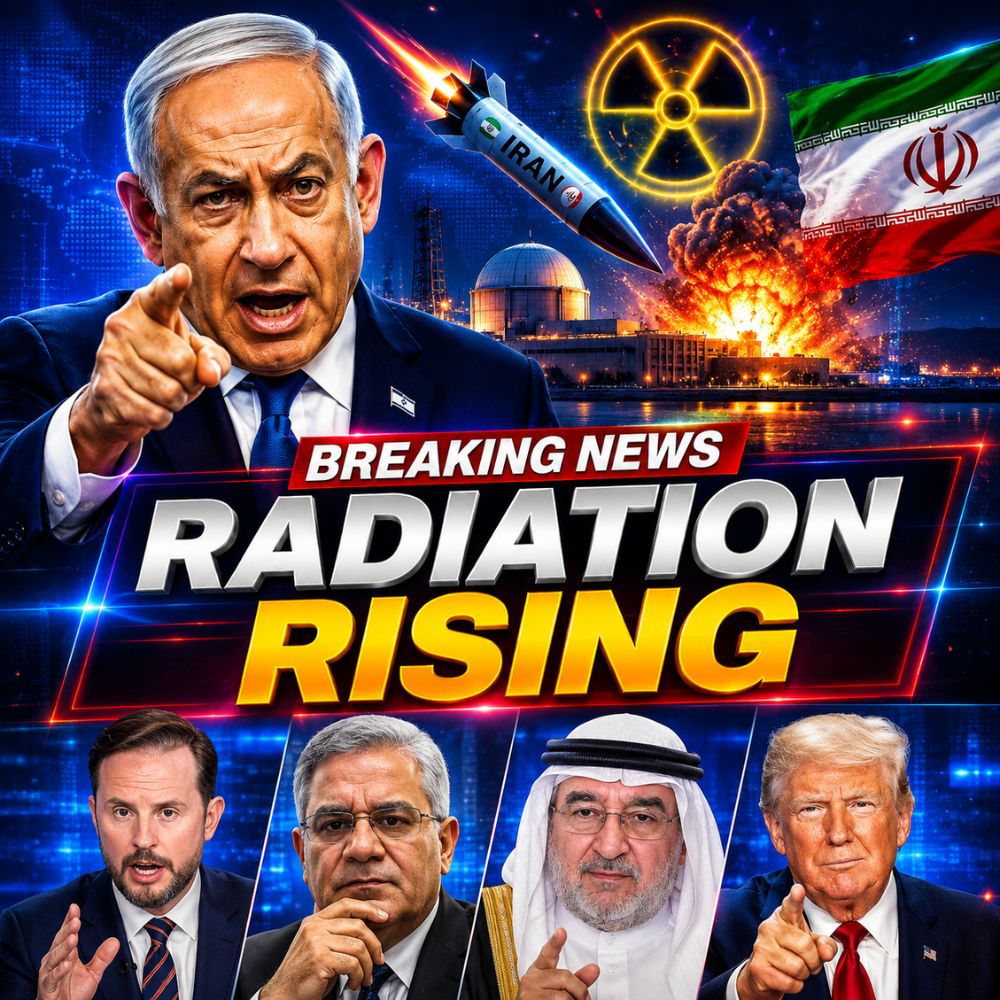
In the quiet, desolate stretches of the Negev Desert, a threshold was crossed tonight that has no equivalent in the history of the nuclear era. For more than twenty years, Western defense establishments, the IAEA, and global intelligence communities have classified the Iranian Shahab-3 ballistic missile as a “nuclear-capable” delivery system. Tonight, that specific missile—designed from its inception to carry nuclear warheads—struck the Dimona nuclear complex. This was the fourth time the facility has been hit in the current conflict, but the choice of weapon has elevated the event from a military strike to a structural shock that threatens the very foundations of international security.
The Shahab-3 is not a general-purpose missile. Derived from the North Korean Nodong platform with Russian engineering assistance, its payload bay is configured specifically to accommodate nuclear warheads. While previous strikes on Dimona utilized the hypersonic Fattah-3 for its unpredictability or the Kheibar Shekan-4 for its bunker-penetrating capabilities, the selection of the Shahab-3 is a calculated communication. It is Iran signaling that it has deployed its primary nuclear delivery vehicle against a target the world universally understands as a center for nuclear weapons infrastructure. The pairing of this platform and this target represents a breach of a taboo that has held since 1945.
As of this morning, the Israeli government has maintained a profound and unsettling silence regarding the nature of the warhead. While independent monitoring organizations like the CTBTO (Comprehensive Nuclear-Test-Ban Treaty Organization) have not confirmed the seismic or electromagnetic signatures of a fission or fusion detonation, the absence of a nuclear explosion does not mean the strike was conventional in its consequences. Dimona was already in a highly compromised state, with fires burning inside its perimeter and containment structures breached by three prior impacts. The Shahab-3 arrived at a facility whose protective layers had been systematically stripped away, allowing its blast energy to interact with already exposed and sensitive infrastructure.
The radiological reality is now manifesting in the atmosphere. Monitoring stations in Jordan, Egypt, and Cyprus have been registering elevated radionuclide readings for days, a trend that is expected to spike following tonight’s impact. In the southern districts of Israel, residents are reporting a “white sky” phenomenon—a specific atmospheric haze indicative of particulate fallout. In the shadow of this escalating disaster, Jordan has already begun distributing potassium iodide tablets to border communities. Yet, the 270,000 residents of nearby Israeli cities like Beersheba, Arad, and Dimona remain in an informational vacuum, unsure whether to evacuate or shelter in place as the plume from the burning facility rises into the troposphere.
From a strategic perspective, Iran has achieved “radiological deterrence” without detonating a single nuclear device. By demonstrating that it can strike a nuclear installation with effective impunity using a nuclear-designated platform, it has turned Israel’s own infrastructure into a radiological weapon. This “symmetry of terror” establishes a new and dangerous precedent: a nation no longer needs recognized nuclear power status to achieve nuclear-scale strategic effects. Every nuclear power plant in the region is now effectively a potential “dirty bomb” waiting to be activated by conventional means.
The international response has been characterized by a mixture of paralysis and urgent calculation. The IAEA has issued its strongest statement to date, demanding immediate access to the site and full transparency regarding the warhead contents. In Washington, the administration has stated that “all options remain on the table”—the most direct language used in this conflict, signaling that we are at a critical decision point. The norm against attacking nuclear installations, a foundational feature of global security, is undergoing its most severe stress test.
The “covenant of Dimona,” once the ultimate guarantor of Israeli national survival, has been tragically inverted. It is now the primary source of national vulnerability. As the fires continue to burn and the international community scrambles to assess the long-term viability of the Negev, the silence from Jerusalem becomes the loudest data point of all. The boundary between a nuclear delivery vehicle and a nuclear weapon was tested in combat for the first time tonight, and while the world waits for the fallout to settle, it is clear that the rules of 21st-century warfare have been rewritten in the sand of the Negev.