

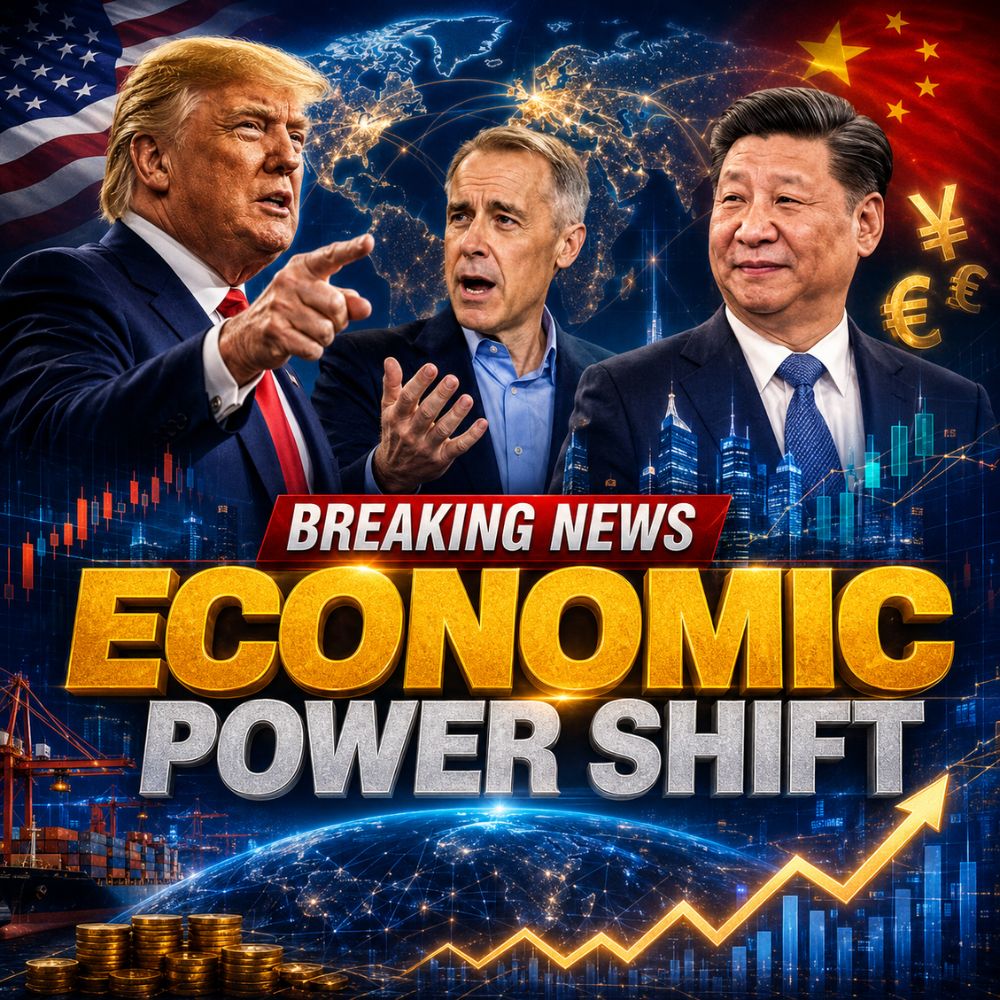
The era of the U.S. dollar as the undisputed, default destination for global capital is facing its most significant challenge in nearly a century. As of early 2026, what began as opportunistic selling has evolved into a “Great Divestment”—a strategy-led, systematic retreat from U.S. assets by some of Washington’s most reliable partners. From Canada’s bond sell-offs to China’s methodical “slow bleed,” the world is no longer treating the U.S. as a safe haven, but as a risk to be managed.
Canada’s Quiet Revolution
The most startling shift comes from America’s closest economic ally. In the final quarter of 2025, Canadian investors executed a record $20.5 billion divestment of U.S. Treasury bonds. While a modest purchase occurred in early 2026, the overall trajectory is undeniable: total holdings plunged from $468 billion to $396 billion in a single month. Under Prime Minister Mark Carney’s “Third Option” strategy, Canada is actively seeking independence, trading its role as a “reliable partner” for that of an “active seeker.”
The Consumer Cold War
This financial pivot is mirrored by a dramatic collapse in cross-border social and leisure ties. By March 2026, car crossings from Canada to the U.S. dropped by a staggering 35% compared to two years prior, while flight bookings for leisure travel fell by 40%. This “consumer revolt” has resulted in an estimated $4.5 billion economic loss for the U.S. tourism and retail sectors, signaling that the Canadian public is as wary of American volatility as the institutional investors.
Energy Independence and New Alliances
Canada’s energy sector—traditionally 97% dependent on U.S. demand—is undergoing a rapid transformation. Following landmark meetings between Carney and global leaders, Canada has signed agreements to reduce tariffs on Chinese EVs and ship crude oil and natural gas to India. By aiming to double non-U.S. exports by 2035, Ottawa is effectively dismantling the “geography is destiny” argument that has tethered its economy to Washington for decades.
China’s Methodical Retreat
Meanwhile, China continues its “slow bleed” of U.S. debt, with Treasury holdings falling to $693.3 billion in February 2026. This represents a 48% drop from its 2013 peak. Rather than dumping debt in a panic, Beijing is methodically swapping paper liabilities for physical commodities. China’s gold reserves have risen for 17 consecutive months, reaching over 74 million ounces, as the nation prioritizes hard assets and semiconductor self-sufficiency over American IOUs.
Bypassing the SWIFT System
A critical component of this decoupling is the rise of alternative liquidity networks. China has signed 40 currency swap agreements, including a crucial 200-billion-yuan line with the Bank of Canada. These arrangements allow nations to settle trades without accumulating U.S. dollars. By late 2024, Renminbi cross-border settlement reached nearly 47% of total transactions, proving that the world is building a financial architecture that can function without Washington’s permission.
The Gulf State Reassessment
The Middle East, long a cornerstone of U.S. investment, is also pulling back. Following the regional instability of the Iran war, sovereign wealth funds in Saudi Arabia, the UAE, Kuwait, and Qatar have initiated deep reviews of their $2 trillion in U.S. assets. Saudi Arabia’s Public Investment Fund (PIF) has already cut new U.S. commitments by 70%, with a majority of regional funds shifting their capital toward Asian allocations and domestic “mega-projects.”
Commercial Real Estate at Risk
The implications of a Gulf pullback are severe. Gulf investors currently own approximately 40% of prime U.S. commercial real estate segments. A full withdrawal would trigger a massive liquidity shock, forcing asset repricing and causing interest rates to spike. As these rational actors reassess U.S. reliability, the $1.5 trillion currently at risk in the property sector could become the epicenter of a domestic financial crisis.
Corporate Strategic Separation
It is not just nations divesting; it is corporations. The 2026 Global Divestiture Survey reveals that companies are actively spinning off U.S. business units that “dilute focus” or face tightening CFIUS (Committee on Foreign Investment in the United States) regulations. U.S. exposure is increasingly viewed as a liability to be managed rather than an asset to be accumulated, as regulatory uncertainty and tariff volatility make American assets harder to value.
Europe’s Path to Sovereignty
Europe and the UK are following suit, moving toward unallocated gold and European equities to escape the reach of Washington’s political whims. France has notably built a $14 billion AI empire by positioning itself as the “non-American” alternative. Simultaneously, the EU and India have signed the “Mother of All Deals,” creating a free-trade zone of two billion people that excludes the United States entirely.
The Mercantilist Vacuum
As the U.S. embraces mercantilist, tariff-fueled policies, it is inadvertently leaving a vacuum in global trade. While four out of five nations have seen trade rise as a share of their GDP over the last eight years, the U.S. is the lone exception, with trade dipping to roughly 25% of its GDP. The world is moving toward open, multi-polar trade frameworks, such as the renewed deals between the EU and South American Mercosur nations.
The Financial Shadow of Fragmentation
The “Great Divestment” is the financial shadow of a fragmented geopolitical landscape. While the U.S. still possesses the deepest markets and a formidable tech sector, the distinction between being the “best available option” and the “only option” has vanished. Global capital is following the path of least political risk, and that path increasingly leads away from American shores.
A New Decadal Reality
As we move through 2026, the question is no longer if the world will decouple, but how fast. The trajectory suggests that American financial dominance may not survive its own political unpredictability. From Hamburg to New Delhi and Beijing, the new systems are being built, the portfolios are being adjusted, and the money is being moved. The world is learning to work without Washington’s permission, and the cost of that lesson is the leverage of an empire.