

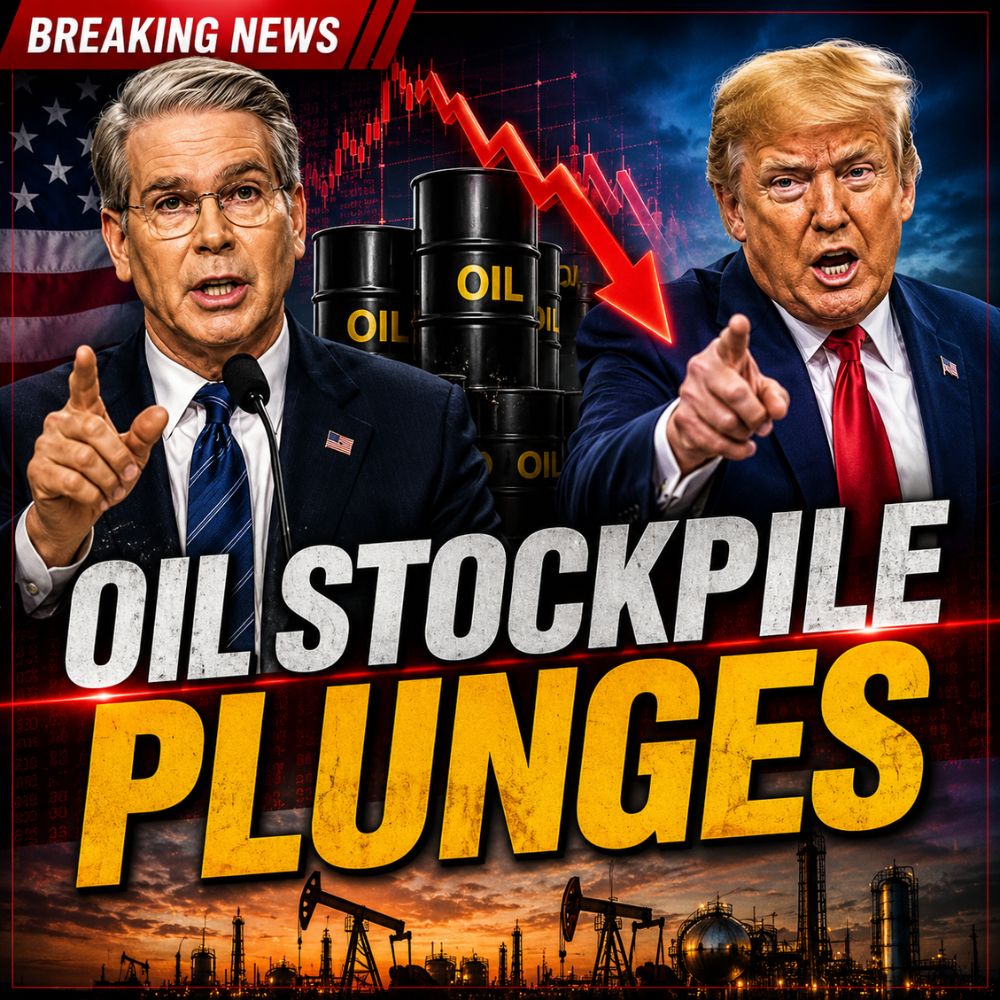
Trump Drains Strategic Petroleum Reserve Faster Than Biden, Undermining Campaign Pledge
WASHINGTON — President Donald J. Trump sharply criticized his predecessor for releasing oil from the Strategic Petroleum Reserve to stabilize prices. Now, his own administration is draining the emergency stockpile at more than twice the rate, driven by a war with Iran that has disrupted global energy markets.
The moves have raised questions about consistency in energy security policy and the long-term health of the nation’s emergency oil buffer.
Broken Campaign Promise
During his 2024 campaign, Mr. Trump repeatedly attacked President Biden for releasing 180 million barrels from the Strategic Petroleum Reserve after Russia’s invasion of Ukraine. He vowed to refill the reserve if elected.
Instead, after taking office, the administration launched military action against Iran in February 2026, triggering an 80 percent surge in oil prices and closing the Strait of Hormuz, which handles about 20 percent of global daily oil supply.
Record Draws from Reserve
Data from the Energy Information Administration shows the SPR lost 9.1 million barrels in a single recent week, nearly matching the all-time record. Over the past two months, the reserve has shed approximately 50 million barrels.
It now holds roughly 374 million barrels, the lowest level since July 2024 and approaching depths not seen since the early 1980s when the reserve was still being filled.
Faster Pace Than Predecessor
Analysts note the current drawdown rate significantly exceeds that of the Biden administration. Mr. Biden released about 180 million barrels over roughly 18 months, averaging around 10 million barrels per month. The Trump administration has averaged about 25 million barrels monthly.
Commodity specialists have described the pace as “supersized” and unsustainable for the SPR’s intended purpose as a last-resort emergency tool.
Political Timing
The accelerated releases come ahead of November midterm elections, with gasoline prices reaching $4.50 a gallon — up 53 percent since the conflict began. Administration officials have used the reserve to blunt the impact of higher energy costs on American consumers.
Critics see a parallel with the very policy Mr. Trump once condemned as politically motivated.
Broader Inventory Strain
The situation extends beyond the SPR. Total U.S. crude, gasoline and diesel inventories are declining. Commercial crude stockpiles dropped 4.3 million barrels in one recent week, while gasoline inventories hit their lowest May level since 2014. Distillate stocks reached their lowest since 2003.
Storage at Cushing, Oklahoma — the key benchmark for U.S. oil futures — is approaching operationally low levels, raising fears of market panic.
Strategic Vulnerability
The SPR was established in 1975 after the Arab oil embargo to provide a cushion during genuine supply crises. Its current use to manage the consequences of a conflict initiated by the United States has alarmed energy analysts.
If draws continue at the present pace, the reserve could fall below 350 million barrels by September, severely limiting the country’s ability to respond to additional disruptions such as hurricanes or further escalation in the Middle East.
Refilling Challenges
Replenishing the SPR is difficult at current price levels. Mr. Trump had opportunities to buy oil when prices were below $60 a barrel but did not act. Now, with elevated prices and ongoing conflict, refilling would be far more expensive.
Feedback Loop Risks
Experts warn of a dangerous cycle: higher prices from supply disruptions increase SPR releases, which in turn affect market psychology and futures pricing at Cushing. This dynamic could accelerate depletion without resolving the underlying crisis in the Strait of Hormuz.
Contrasting Approaches
The Biden administration used the reserve during an external shock — Russia’s invasion of Ukraine — while international markets adjusted. The current drawdown addresses a supply shock tied directly to U.S. foreign policy decisions.
Energy analysts say the distinction matters for the reserve’s credibility as a nonpartisan strategic asset.
Longer-Term Implications
Continued depletion risks leaving the United States more vulnerable to future emergencies. At current trends, the SPR could approach levels that compromise its effectiveness as a national security tool.
The situation highlights the tension between short-term political pressures and long-term energy resilience in an era of geopolitical volatility.
Policy Questions
As the midterm elections approach, the administration faces difficult choices. Sustained SPR releases may keep gasoline prices in check temporarily but at the cost of diminished emergency capacity.
Whether the reserve can be meaningfully replenished before the next crisis remains uncertain.
A Defining Test
Mr. Trump’s handling of the SPR tests his campaign rhetoric on energy dominance and security. The rapid drawdown, following strong criticism of his predecessor, has become a focal point for critics questioning policy consistency.
For now, the emergency buffer created to protect against foreign disruptions is being used to manage the domestic fallout of America’s own military engagement in the Middle East.