


“The Quiet Pivot”: How Canada and Mexico Just Stole the World Cup Spotlight from the U.S.
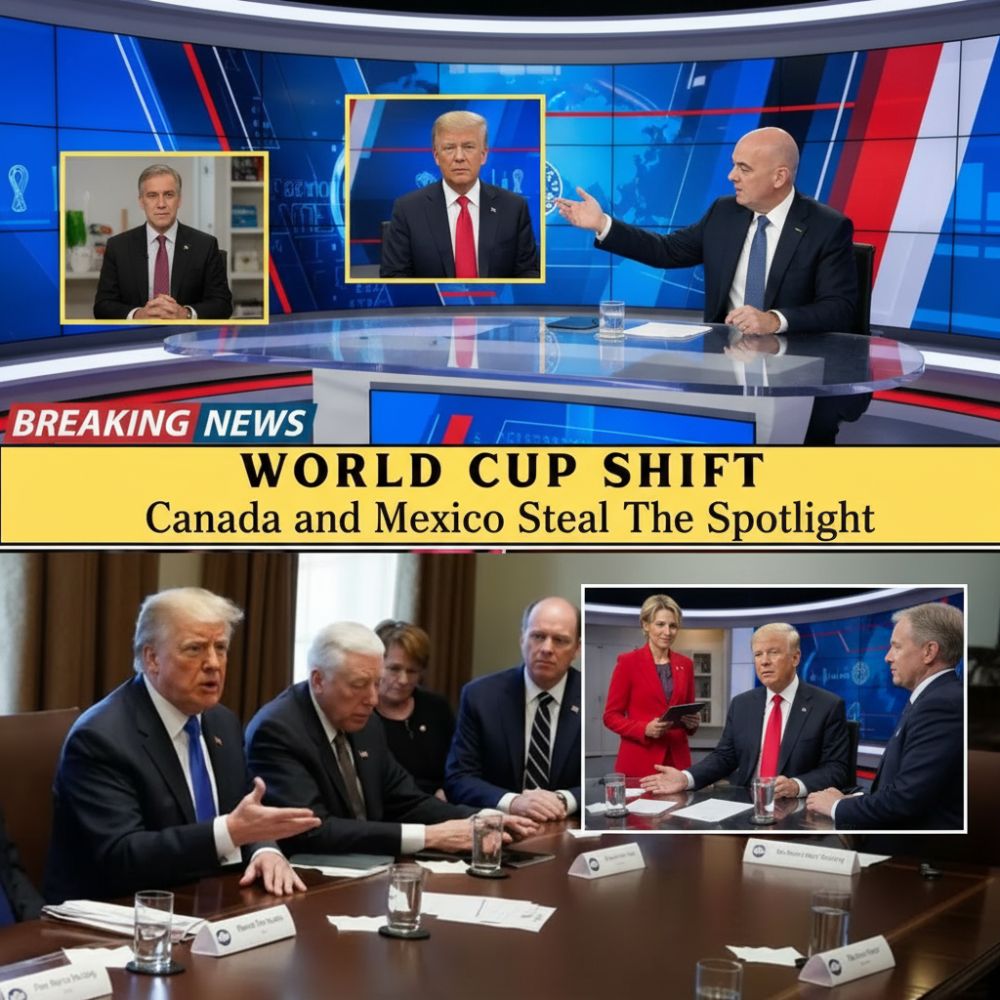
In the high-stakes world of international sports diplomacy, optics are everything. And just months before the opening kickoff of the most anticipated World Cup in history, a stunning shift in momentum is sending shockwaves through the global football community. The spotlight, once firmly fixed on American stadiums and U.S. branding, is quietly but unmistakably migrating north and south.
Insiders say a series of behind-the-scenes planning decisions and hosting priorities have increasingly centered on Canada and Mexico, leaving many in the United States surprised—and Washington scrambling to understand what just changed.
The 2026 FIFA World Cup, the first ever to be co-hosted by three nations, was always billed as a “United Bid.” But as the June 11 opening match at Mexico City’s iconic Estadio Azteca approaches, the balance of power within that partnership appears to be shifting in real-time . Recent announcements regarding infrastructure investments, event logistics, and ceremonial planning have disproportionately highlighted Canadian and Mexican venues, raising eyebrows across the sports world.
“Something has changed in the room,” said Martin Edwards, a sports marketing analyst based in Toronto. “The narrative was always ‘the U.S. is the economic engine, the others are supporting cast.’ But the energy, the new infrastructure money, the FIFA site visits—they’re all buzzing around Toronto, Vancouver, Mexico City, and Monterrey. The U.S. venues feel almost… secondary.”
The shift is particularly evident in the final wave of host city preparations. While American cities like Dallas and Atlanta have long been touted as tournament anchors, recent FIFA communications have spotlighted Canada’s accelerated stadium upgrades at BMO Field in Toronto and BC Place in Vancouver, alongside Mexico’s historic renovations at the Azteca . The message is clear: the tournament’s soul is no longer centered solely on American soil.
Sports analysts warn the rebalancing could have profound implications for tourism flows, sponsorship valuations, and global media attention. With an estimated $40.9 billion in global GDP impact projected for the tournament, even a modest redistribution of focus translates into hundreds of millions of dollars shifting away from U.S. markets .
“The money follows the spotlight,” explained Edwards. “If the most iconic images of this World Cup—the opening ceremony, the cultural moments, the ‘welcome to the world’ branding—are coming out of Mexico City and Vancouver, that’s where the long-term tourism and investment legacy lands.”
Behind the scenes, sources suggest the shift is not accidental. With U.S. political rhetoric toward its co-hosts growing increasingly tense—including recent tariff threats and diplomatic friction—Canada and Mexico have reportedly accelerated their own infrastructure timelines, ensuring they are not merely passengers in the American-led project .
For Mexico, the moment carries historic weight. The Azteca Stadium will become the first venue to host matches in three separate World Cups, a distinction Mexican organizers have leveraged relentlessly in FIFA corridors . For Canada, hosting its first-ever men’s World Cup matches represents a generational opportunity to reshape the nation’s sports identity beyond hockey .
The question now circulating among sports diplomats and business leaders is simple: why did the balance shift?
Some point to the quiet but effective lobbying of Canadian and Mexican officials, who have positioned their nations as stable, welcoming alternatives amid U.S. political turbulence. Others note that FIFA, sensitive to perceptions of American dominance, may be intentionally elevating its partners to preserve the “united” brand.
Whatever the cause, the effect is undeniable. The 2026 World Cup is no longer America’s party with two guests. It is a trinational showcase where, for the first time, the hosts are truly sharing the stage.
As one FIFA insider put it: “The U.S. provided the stadiums. Canada and Mexico are providing the soul. And the world is watching both.”