


For years, Canada’s energy sector was defined by hesitation, delays, regulatory battles, and political stalemate. Major pipeline projects became symbols not of national ambition, but of national paralysis. Investors lost confidence, billions of dollars left the country, and critics increasingly argued that Canada had become unable to build large-scale infrastructure at all.
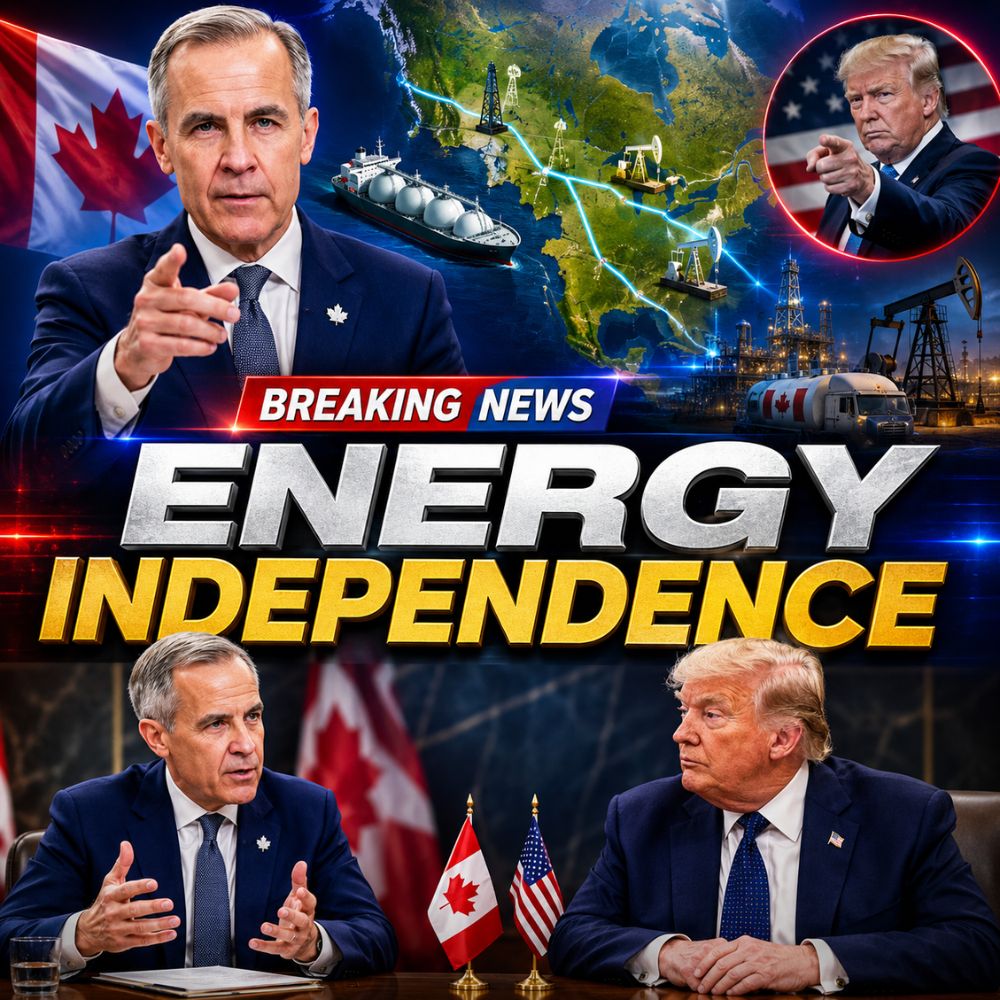
Now, that perception may be beginning to change.
In what many analysts are calling one of the most consequential economic decisions of Prime Minister Mark Carney’s government so far, Canada has officially approved the massive Sunrise natural gas pipeline expansion led by Enbridge.
The project carries an estimated value of approximately $4 billion and represents the first major pipeline approval under Carney’s administration.
More importantly, supporters believe it could fundamentally reshape Canada’s long-term position in global energy markets.
The Sunrise expansion will add nearly 140 kilometers of new pipeline infrastructure across western Canada while increasing natural gas transportation capacity by approximately 300 million cubic feet per day.
Construction is expected to begin this summer, with commercial gas flows projected by late 2028.
Much of the additional supply is expected to move toward LNG export terminals in Kitimat on Canada’s Pacific coast, where shipments can then reach rapidly growing Asian markets including Japan, South Korea, and Malaysia.
The timing of the approval is especially significant.
Global energy markets remain deeply unstable following years of geopolitical disruption, sanctions, supply-chain shocks, and continuing conflict in the Middle East.
Asian governments are increasingly searching for stable, democratic, and politically reliable long-term energy suppliers capable of reducing dependence on volatile regions.
Canada possesses some of the world’s largest natural gas reserves, but historically struggled to fully capitalize on them because of infrastructure bottlenecks and export limitations.
The Sunrise project is designed specifically to address part of that challenge.
By expanding west coast export capacity, Canada gains greater direct access to Asian demand rather than relying overwhelmingly on the United States as its dominant energy customer.
That shift carries enormous economic and geopolitical implications.
For decades, Canada’s energy sector has remained deeply tied to American markets. While the relationship generated enormous trade benefits, it also created strategic vulnerability. Changes in U.S. policy, tariffs, regulations, or political priorities could heavily affect Canadian industries almost overnight.
Carney’s government increasingly appears determined to reduce that dependence.
The Sunrise expansion fits into a broader strategy focused on diversifying exports, strengthening sovereign economic capacity, and positioning Canada as an independent energy power rather than simply a resource extension of the American economy.
Analysts say access to Asia could dramatically strengthen Canada’s leverage in future trade negotiations.
“If Canada can reliably export major volumes of LNG to Asia, Ottawa gains options,” one Calgary-based energy strategist explained. “And in global trade politics, optionality is power.”
One of the most politically important aspects of the Sunrise approval involves Indigenous participation.
Thirty-eight First Nations already hold a 12.5% ownership stake in the broader west coast pipeline system connected to the project.
That ownership structure is being viewed by many policymakers as a potentially transformative model for future Canadian infrastructure development.
For years, pipeline politics in Canada became deeply entangled with unresolved Indigenous rights issues, environmental concerns, and conflicts over land use and consultation.
Many previous projects collapsed under legal challenges, public protests, or political resistance.
The Sunrise project appears to reflect a different approach—one emphasizing equity participation rather than purely external consultation.
Supporters argue the model creates stronger incentives for long-term partnership and local economic development while giving Indigenous communities direct financial benefits tied to project success.
Critics remain skeptical, arguing ownership participation does not eliminate broader environmental concerns associated with fossil fuel expansion.
Environmental organizations continue warning that large new natural gas infrastructure projects risk complicating Canada’s climate goals and long-term emissions commitments.
Some activists argue global investment should focus more aggressively on renewable energy systems rather than expanding LNG capacity.
Yet even some climate policy analysts acknowledge the global energy transition remains highly uneven.
Many Asian economies continue relying heavily on coal for electricity generation, and some policymakers argue Canadian LNG could help reduce overall emissions if it replaces higher-polluting coal infrastructure abroad.
That debate remains highly contested.
Still, politically, the Sunrise approval signals a clear change in tone from Ottawa.
The Carney government has increasingly framed itself as pursuing a more pragmatic economic strategy built around industrial competitiveness, strategic infrastructure, and faster project approvals.
Officials describe the Sunrise decision as evidence that Canada can simultaneously pursue economic growth, Indigenous partnership, and global energy influence without remaining trapped in endless political gridlock.
Business groups welcomed the approval enthusiastically.
For years, investors criticized Canada’s regulatory environment as excessively slow, unpredictable, and politically unstable. Major projects often spent close to a decade navigating approvals, environmental reviews, court challenges, and jurisdictional disputes.
That uncertainty pushed significant investment capital toward countries perceived as easier places to build.
Supporters of Sunrise argue the approval demonstrates Canada may finally be reversing that reputation.
“This is bigger than one pipeline,” one Toronto investment executive observed. “This is about whether Canada can still execute major national projects in the modern world.”
The international dimension is equally important.
As geopolitical tensions rise globally, energy security is becoming increasingly central to foreign policy and alliance systems.
Countries able to provide stable energy supplies gain strategic influence far beyond simple commodity exports.
Canada’s Pacific access gives it a particularly important advantage.
Unlike many major energy producers, Canada benefits from political stability, secure coastlines, strong legal systems, and relatively protected shipping routes. Those characteristics are becoming increasingly valuable in an era of growing global instability.
Asian buyers are paying close attention.
Japan and South Korea, both heavily dependent on imported energy, have spent years seeking diversified LNG suppliers outside geopolitically risky regions.
Canadian LNG offers an attractive alternative because it combines resource abundance with democratic governance and long-term reliability.
Malaysia and other Asian markets are also expected to expand LNG demand significantly over the coming decades.
The Sunrise expansion therefore arrives at a moment when global demand conditions may strongly favor Canadian exports.
The political symbolism surrounding the project has also attracted attention internationally.
For years, critics of Canada argued the country possessed enormous natural resources but lacked the political cohesion necessary to develop them efficiently.
Pipeline cancellations became international examples of regulatory dysfunction and political fragmentation.
Carney’s government appears determined to challenge that perception directly.
By approving Sunrise, Ottawa is signaling that Canada intends to compete more aggressively in global energy markets while reducing vulnerability to external economic pressure.
That broader strategic logic may matter as much as the pipeline itself.
The United States remains Canada’s closest ally and largest trading partner by far. But recent years demonstrated how rapidly trade tensions, tariffs, and political disputes can emerge even between deeply integrated allies.
Diversifying export capacity therefore serves not only commercial objectives, but strategic ones.
If Canada can build major LNG relationships with Asia while strengthening energy ties with Europe, it gains greater autonomy in navigating future geopolitical tensions.
That possibility helps explain why the Sunrise approval is receiving attention far beyond the energy sector alone.
It represents a test of whether Canada can successfully transition from a country known primarily for resource potential into one capable of converting that potential into sustained geopolitical influence.
Success is far from guaranteed.
Large infrastructure projects still face legal, environmental, financial, and logistical risks. Global energy prices remain volatile. Climate policy pressures continue intensifying worldwide.
But for supporters, the key point is that Canada is finally moving.
After years of hesitation, delay, and uncertainty, the country has approved a major strategic infrastructure project aimed directly at expanding sovereign economic power and global market access.
And in an increasingly unstable world, that may prove to be one of the most important political shifts Canada has made in decades.