

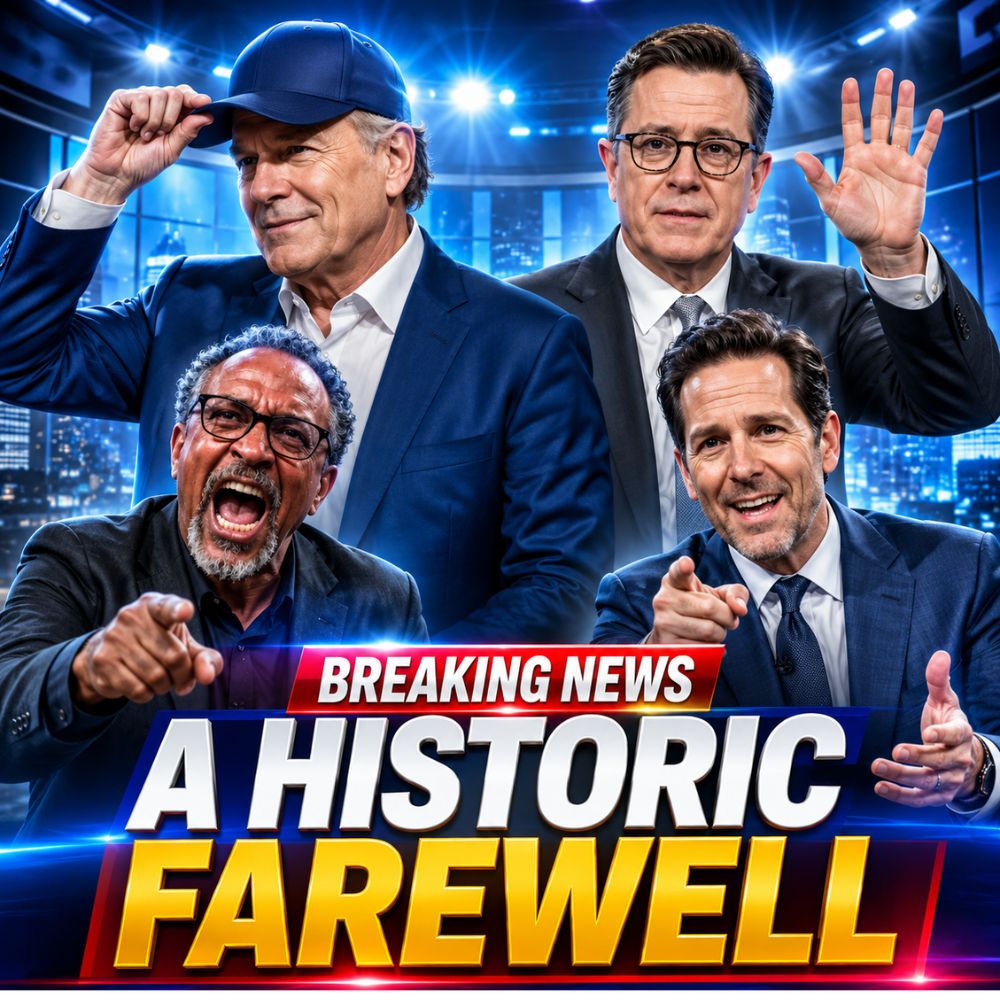
Stephen colbert delivers emotional farewell on final late show episode
Stephen Colbert closed the curtain on The Late Show Thursday night with a finale that blended heartfelt reflection, comedy, and star-studded surprises. The Ed Sullivan Theater was packed with long-time friends, VIPs, and loyal fans as Colbert walked onto the stage to a deafening cheer, acknowledging the eleven-year run of his CBS show while subtly referencing the controversy behind its cancellation .
While Paramount cited financial pressures for ending the show, critics and fans pointed to political tensions involving the Trump administration as a possible influence. Despite the abrupt cancellation, Colbert remained composed, expressing gratitude for the experience rather than anger. “We were lucky enough to be here for the last 11 years. You can’t take this for granted,” he told the audience, setting a reflective tone for the evening .
The monologue was punctuated by appearances from celebrity friends, including Bryan Cranston, Paul Rudd, and Tim Meadows, all vying for a guest spot. Ultimately, Sir Paul McCartney joined Colbert for an in-depth interview, creating a poignant full-circle moment: McCartney famously performed on the same Ed Sullivan stage with The Beatles in 1964. Their discussion ranged from McCartney’s resistance to change to Colbert’s reflections on his own career and evolution as a late-night host .
The show also featured surreal comedic sketches, including an imagined “interdimensional wormhole” threatening late-night television. Fellow hosts John Oliver, Jimmy Kimmel, and Jon Stewart made cameos, blending satire, meta-commentary, and nostalgic tributes to the late-night genre. Musical performances included Colbert, Elvis Costello, and Jon Batiste performing Costello’s “Jump Up”, followed by McCartney and Costello singing “Hello, Goodbye”, closing the show with both celebration and sentimentality .
Off-camera, Colbert and his production team celebrated at a star-studded wrap party. Though he admitted to People Magazine that he hasn’t yet planned his next project in detail, he is slated to help write a new Lord of the Rings film, hinting that his creative journey is far from over .
With Colbert’s exit, CBS has leased the 11:35 p.m. time slot to Byron Allen’s Comics Unleashed, a show with a rotating panel of comedians and a non-political, evergreen format. While the slot will continue to entertain, fans and industry observers are left reflecting on the end of an era defined by Colbert’s incisive humor, cultural commentary, and late-night influence .
Beyond the celebrity appearances and comedic sketches, the finale carried an unmistakable sense of gratitude. Colbert repeatedly turned the spotlight toward the people behind the scenes, thanking writers, producers, camera operators, and crew members who helped shape The Late Show over more than a decade. For many in the theater, it felt less like the ending of a television program and more like the closing chapter of a family built through years of collaboration.
Fans watching from home flooded social media with emotional reactions, sharing favorite memories from Colbert’s eleven-year run. Many praised his ability to navigate difficult political and cultural moments with humor, intelligence, and sincerity. Clips from the finale quickly spread online, particularly McCartney’s appearance and Colbert’s emotional closing remarks, as viewers reflected on how deeply the host had become part of their nightly routine.
Sir Paul McCartney’s presence gave the episode an especially symbolic weight. By returning to the Ed Sullivan Theater decades after The Beatles’ legendary 1964 performance, McCartney bridged generations of television history. The moment reinforced the idea that late-night television is not only entertainment but also a cultural institution—one capable of preserving memories while continuously reinventing itself.
Despite speculation surrounding the show’s cancellation, Colbert avoided bitterness and instead focused on appreciation. His closing message emphasized resilience, humor, and the importance of staying connected during uncertain times. Rather than framing the finale as a defeat, he presented it as a celebration of everything the show had accomplished and the countless conversations it sparked over the years.
Industry analysts have already begun debating what Colbert’s departure means for the future of late-night television. In an era dominated by streaming platforms and shifting audience habits, many see the finale as the end of a defining chapter for network talk shows. Colbert’s blend of sharp political commentary and heartfelt storytelling had carved out a unique space that may prove difficult to replace.
Still, Colbert himself appears optimistic about what lies ahead. Although he admitted he has not mapped out every step of his future, his involvement in upcoming creative projects suggests he is far from stepping away from storytelling. Fans remain hopeful that whether through film, writing, or another television venture, his voice will continue to resonate in new and unexpected ways.
As the final credits rolled and music filled the historic theater, there was a shared feeling that something significant had ended. Yet, for many loyal viewers, Stephen Colbert’s legacy will endure far beyond the walls of the Ed Sullivan Theater. Through laughter, thoughtful commentary, and moments of genuine humanity, The Late Show leaves behind a lasting imprint on late-night television history.