

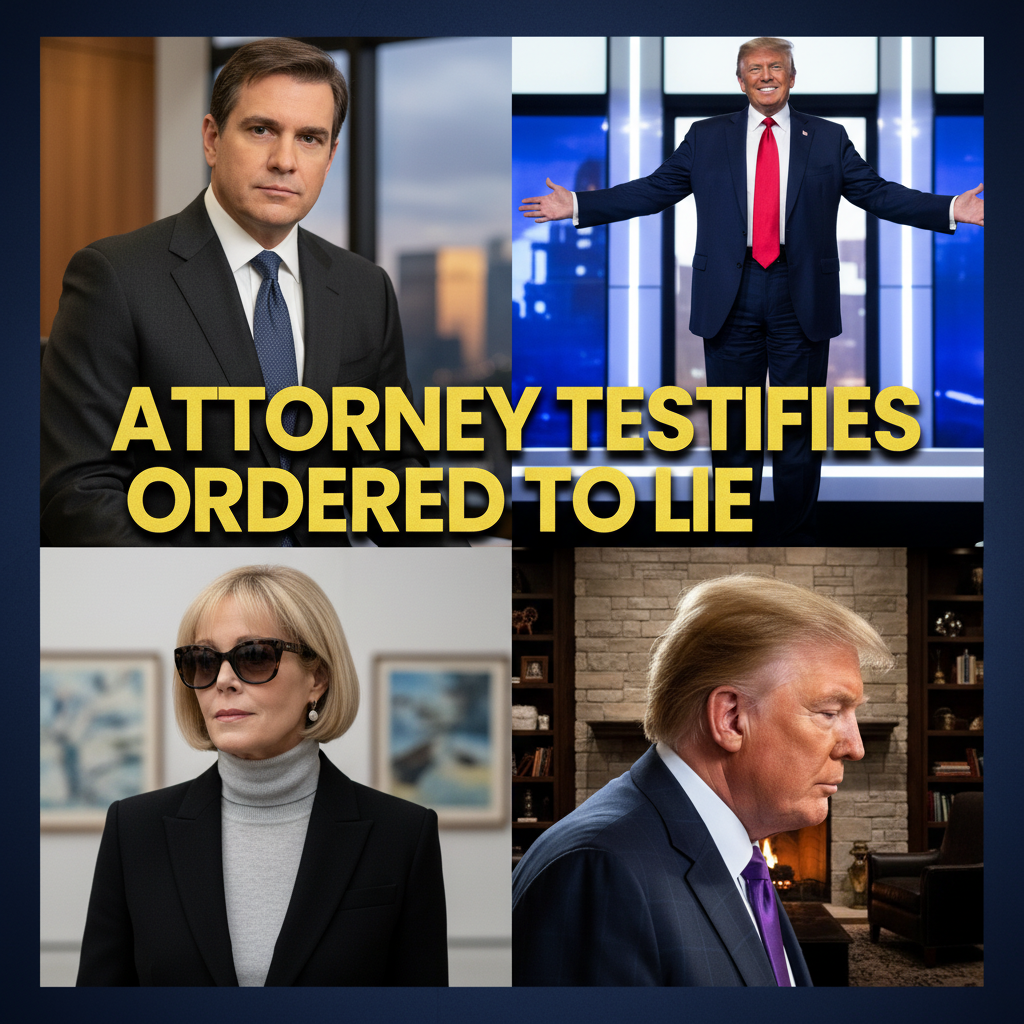
The Architect of Dirty Deeds: Michael Cohen and the Anatomy of the Loyalty Trap
In the high-stakes theater of a New York courtroom, the air is thick with the scent of a dying secret. For more than a decade, Michael Cohen was the human shield for Donald Trump—a “fixer” whose professional life was organized around the singular principle of blind loyalty. But as Cohen returns to the witness stand for cross-examination, the world is witnessing the most dangerous moment for any principal in a cover-up: the moment when the loyalist decides the secret is no longer worth his freedom.
The story of Michael Cohen is not just a tale of a rogue lawyer. It is a documented autopsy of an operational system—a system where legal advocacy blurred into criminal concealment, and where the “fixer” eventually became the primary witness for the prosecution.
I. The Moment the Loyalty Ran Out
There is a specific, visceral moment in every conspiracy when the person tasked with keeping the secrets realizes the cost has become too high. For Michael Cohen, that moment didn’t happen in a lucrative book deal or a television interview. It happened in the most legally consequential way possible: in a federal courtroom, under oath, during a guilty plea.
In 2018, Cohen stood before a judge and admitted that he had lied to Congress. These weren’t “misstatements” or “honest mistakes.” They were deliberate, tactical falsehoods regarding the Trump Tower Moscow project—a real estate deal being pursued in Russia during the height of the 2016 presidential campaign. While Trump was publicly declaring he had “no business in Russia,” Cohen was privately briefing him on extensive negotiations.
The Anatomy of the Lie
Cohen admitted to three major misrepresentations to Congress:
The Timeline: He claimed negotiations ended early in 2016, when they actually continued through the summer.
The Extent: He downplayed his contacts with Russian officials.
The Principal’s Involvement: He claimed his briefings to Trump were limited, when they were actually extensive.
When the judge asked why he lied, Cohen’s answer provided the factual foundation for the 34 felony convictions that would later follow: he did it to be “consistent with Individual One’s political messaging.” Individual One, of course, was Donald Trump.
II. Direct Orders vs. The Loyalty System
One of the most debated aspects of the Cohen saga is whether Donald Trump explicitly told him to lie. In 2019, BuzzFeed News reported that such a direct order existed, citing anonymous sources. In a rare move, the office of Special Counsel Robert Mueller disputed the specific characterization of that report.
However, legal experts argue that the distinction between a Direct Order and Implicit Pressure is a distinction without a difference when it comes to the culture of corruption.
The Operational Model of “Blind Loyalty”
Cohen described a system that worked not through a chain of explicit commands, but through an environment where the principal’s needs were understood without being spoken. This is the Loyalty-Based Model.
In this model:
The principal (Trump) creates an environment where loyalty is the only currency.
The subordinate (Cohen) understands what “Individual One” needs to survive politically.
The subordinate acts (lies to Congress, pays hush money) to fulfill that need.
The principal maintains “plausible deniability” by never issuing a “smoking gun” instruction.
Prosecutors have argued that this model is actually more operationally stable—and more dangerous—than a direct-order system because it relies on a shared, uncritical understanding of “dirty deeds.”
III. The Domino Effect: A Pattern of Lawyer Flips
Michael Cohen was the first “domino” to fall, but he was far from the last. The legal history of the Trump presidency is marked by a stunning accumulation of personal attorneys who moved from the inner circle to the prosecutor’s office.
| Attorney | Role | Outcome |
| Michael Cohen | Personal Fixer | Pleaded guilty; Star witness in NYC Hush Money case. |
| Jenna Ellis | 2020 Election Legal Team | Pleaded guilty in Georgia RICO case; Agreed to cooperate. |
| Sidney Powell | “Kraken” Legal Strategy | Pleaded guilty in Georgia; Reached cooperation agreement. |
| Classified Docs Attorney | Defense Counsel | Provided notes/voice memos to the FBI regarding obstruction. |
This pattern is not coincidental. It reflects a system that repeatedly required lawyers to cross the line from zealous advocacy to criminal participation. As the legal pressure mounted, each of these individuals made the same cold calculation: their own legal survival was more important than continued loyalty to a principal who had created their legal exposure.
IV. The Moscow Project: A Political Shield
To understand why Cohen’s lies were so damaging, one must look at the political landscape of 2016. The Moscow project wasn’t just a business deal; it was a massive political vulnerability. If the public knew that the candidate was negotiating a multi-million dollar tower in the heart of Russia while simultaneously praising Vladimir Putin, the “conflict of interest” narrative would have been insurmountable.
Cohen’s lies were “calibrated.” They were specifically shaped to protect a political narrative. This is the definition of suborning the truth for political gain. By the time Cohen sat down with Mueller’s team, the “dirty deeds” had become a documented record of how the Trump Organization functioned as an extension of the Trump campaign.
V. Cross-Examination: The Credibility Battle
As the current trial progresses, the defense team, led by Todd Blanche, has one primary objective: whittle away Cohen’s credibility.
The defense strategy relies on several key pillars:
-
The Admitted Liar: “How can you believe a man who admits he lied to Congress under oath?”
-
The Vengeful Former Employee: “He is only testifying because he wants revenge for being ‘thrown under the bus.’”
-
The Profit Motive: “He makes money from his podcasts and books by attacking Donald Trump.”
While these are potent arguments for a jury, the prosecution has countered by corroborating Cohen’s testimony with a paper trail. Bank records, phone logs, and internal Trump Organization emails provide a “factual skeleton” that supports Cohen’s “dirty deeds” narrative. As former Trump attorney Tim Parlatore noted, Cohen has been “connecting with the jury” because the story he is telling fits the evidence they have already seen.
VI. The Consequences: 34 Felonies and Beyond
The result of this system of loyalty and concealment was the unprecedented conviction of a former president on 34 felony counts. The hush money payments to Stormy Daniels were not just private scandals; they were judged by the legal system as part of a deliberate scheme to influence an election by unlawful means—specifically, by falsifying business records to cover up the principal’s involvement.
Cohen’s testimony was the bridge that connected the falsified records to the candidate’s intent. He described the “awareness and intention” behind the cover-up. He made it clear that these weren’t accounting errors; they were “dirty deeds” done at the direction of the candidate to ensure political survival.
VII. Why the Loyalty System is More Dangerous for Trump
Legal experts suggest that the “Loyalty Model” Cohen described is actually more legally damaging to Trump than a direct order would have been.
If Trump had given a direct order to lie, the defense could argue it was a one-time lapse in judgment or a misunderstanding. But a System of Loyalty implies a RICO-style conspiracy. it describes a persistent, operational way of doing business. It suggests that the entire organization was geared toward criminal concealment.
Every flip—from Jenna Ellis in Georgia to the anonymous attorneys in the Mar-a-Lago documents case—reinforces the idea that the “principal” at the center of the system is the common denominator. The cumulative weight of multiple lawyers, across multiple jurisdictions, all describing the same “loyalty-based” corruption, makes it nearly impossible for the defense to argue that this is all a “fabricated persecution.”
VIII. Conclusion: The Cost of Blind Loyalty
Michael Cohen was the architect of Trump’s “dirty deeds,” and he paid for it with his law license and his freedom. His transformation from “fixer” to “witness” serves as a warning about the fragility of loyalty when it is built on a foundation of illegality.
As the cross-examination continues, the jury isn’t just evaluating Michael Cohen; they are evaluating the system he belonged to. They are seeing what happens when a principal demands “blind loyalty” and what happens when that loyalty inevitably snaps under the weight of the law.
The lawyers are talking. The fixers are testifying. And the secrets that were supposed to be kept at all costs are now the very things driving the most significant legal reckoning in American political history. Stay tuned—the next chapter of this trial will dive deep into the specific legal theories that turn “loyalty” into a felony.